 Claude skill
Make a Netflix-style clay documentary about any true story
One free Claude skill that researches a true story, writes the narration and builds every clay set, puppet and lamp in code inside Blender. You get a finished one minute documentary, and you never animate a frame by hand.
By Josh Pocock · Nov 14, 2026 · v1.0 · 3 min read
 Claude Code
On this pageThe one prompt
The one prompt
Paste this into Claude Code. It installs the skill, checks your computer and renders one test frame of clay.
https://github.com/joshpocock/clay-doc
Install this skill, then run its doctor and its selftest.
- 01Install BlenderFree from blender.org, version 4.2 or newer. The doctor tells you if anything else is missing.
- 02Pick a true storyOr ask Claude for three. It needs a clock, a number and a twist.
- 03Say yes to the scriptClaude shows the story with every source and the narration. Nothing is built until you agree.
- 04Check the stillsOne frame per shot first, so a broken shot never costs you a long render.
- 05Get film.mp41920x1080, about a minute, voiced, with the title card and time stamps.
By hand
git clone https://github.com/joshpocock/clay-doc.git ~/.claude/skills/clay-doc
python ~/.claude/skills/clay-doc/scripts/doctor.py
python ~/.claude/skills/clay-doc/scripts/selftest.py
What to type
Make me a clay documentary about <a true story>. Find the clock, the number and the twist, source every fact, and show me the narration before you build anything.No story in mind? Ask for three true stories from the last few years that have all three. The best ones come from incident reports, court records, museum write-ups and dated news.
How it works
| Step | What happens |
|---|---|
| Story | A clock (something happening right now), one number people remember, and a twist. Every fact gets its own line with a source link, and a checker fails the story if one is missing. |
| Script | One picture per sentence. If a sentence cannot be drawn, it is cut. A title card hits on black after the open. |
| Voice | ElevenLabs on its newest model if you have a key, otherwise a free voice on your own computer. Or record your own lines. |
| Sets | Claude writes one Python function per shot: clay with fingerprints and thumb dents, puppets, lamps inside the set, a camera that never stops moving. |
| Stills | One frame per shot. Claude looks, then fixes dark frames, mirrored text and puppets that stand like mannequins. |
| Render | Blender in the background. Opening shots at every frame, the rest at 12 frames a second for the stop-motion feel. If it stops, it picks up where it left off. |
| Cut | Grain, a soft vignette, time stamps typing on, the title with the film showing through the letters, the voice and a music bed. |
Why it looks expensive
- Real things are not perfect. Clean plastic reads like a 2005 video game. Fingerprints, dents and uneven colour read like clay.
- Lamps inside the set. Desk lamps, the glow of screens, a moon in a window. The corners stay dark.
- One small action per puppet. A blink, a breath, a look up. Still puppets read dead.
- The camera never stops. A slow push, a slide along a row, a rise at the end. Shallow focus on the subject.
- It's the grammar, not the visuals. Time stamps, a place name, a title card on black and a calm narrator make it feel like a streaming documentary.
One real run
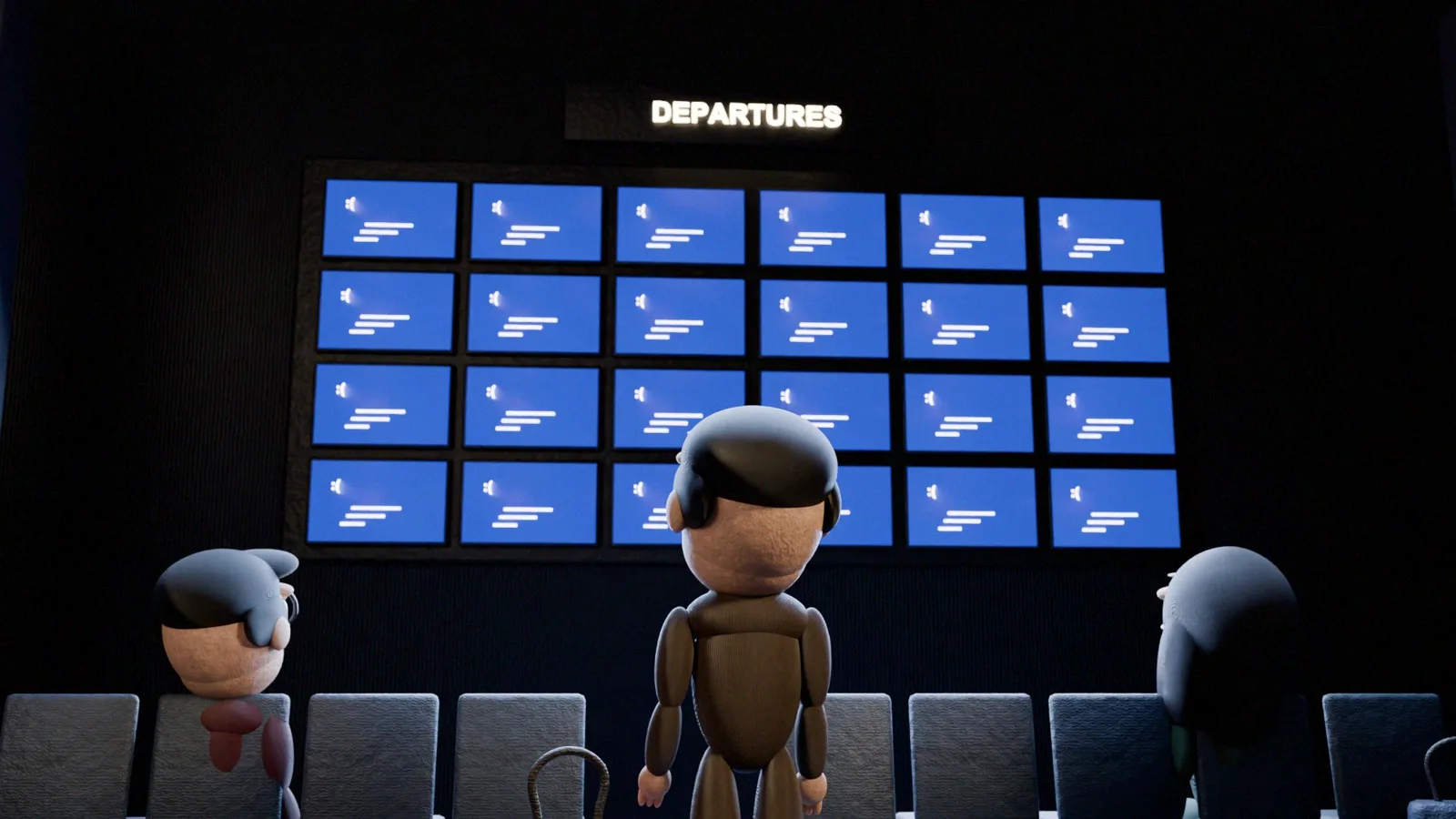
The example in the repo is Channel File 291, the July 2024 outage that stopped about 8.5 million Windows computers: 16 shots, 1,751 frames, every one built in code. Its story file lists every fact with its source, and its scene file is the full film you can read and copy.
The skill was also tested from a fresh install on a story it had never seen: the 1919 Boston molasses flood. The first stills caught buildings facing the wrong way and a camera parked inside a wall, which is exactly what the stills step is for. They were fixed before the long render.
The fine print
What you need. Windows, macOS or Linux, Python 3.8 or newer, Blender 4.2 or newer, ffmpeg and Pillow. A graphics card makes it many times faster. Without one it still works, so check the stills first.
True stories only. Every fact the narrator says is in the story file with a source. Clay puppets only, never a real person's likeness.
Nothing leaves your computer. Claude never posts or uploads the film. The only outside call is the voice, and only if you choose ElevenLabs.
Free. MIT licence, no signup. The fonts are open licence.