 Claude skill
Video Jury: 7 honest judges on your video before you post it
A free Claude skill. Give it a video and seven separate Claude judges each check one thing, from the first 3 seconds to the cover, then hand you one verdict and up to five fixes.
By Josh Pocock · Nov 14, 2026 · v1.0 · 4 min read
 Claude Code
On this pageThe one prompt
The one prompt
One line. Paste this into Claude Code and it does the rest.
Install the Video Jury skill: clone https://github.com/joshpocock/video-jury into ~/.claude/skills/video-jury, check that ffmpeg is installed, then confirm /video-jury works.
- 01Copy the prompt aboveThe repo link plus one line
- 02Paste it into Claude CodeClaude installs the skill
- 03
/video-jury my-video.mp4Add the cover and caption if you have them - 04Read the verdictOne decision, up to five fixes
By hand
git clone https://github.com/joshpocock/video-jury ~/.claude/skills/video-jury
Start a new Claude Code session and type /video-jury followed by the path to your video.
You also need ffmpeg (free)
ffmpeg is the free tool that pulls the frames and measures the sound. Pick the line for your computer, then open a new terminal.
winget install ffmpeg          # Windows
brew install ffmpeg            # Mac
sudo apt install ffmpeg        # Linux
It is built and tested in Claude Code, where the seven judges run at the same time as separate agents. It has not been tested in the Claude chat app.
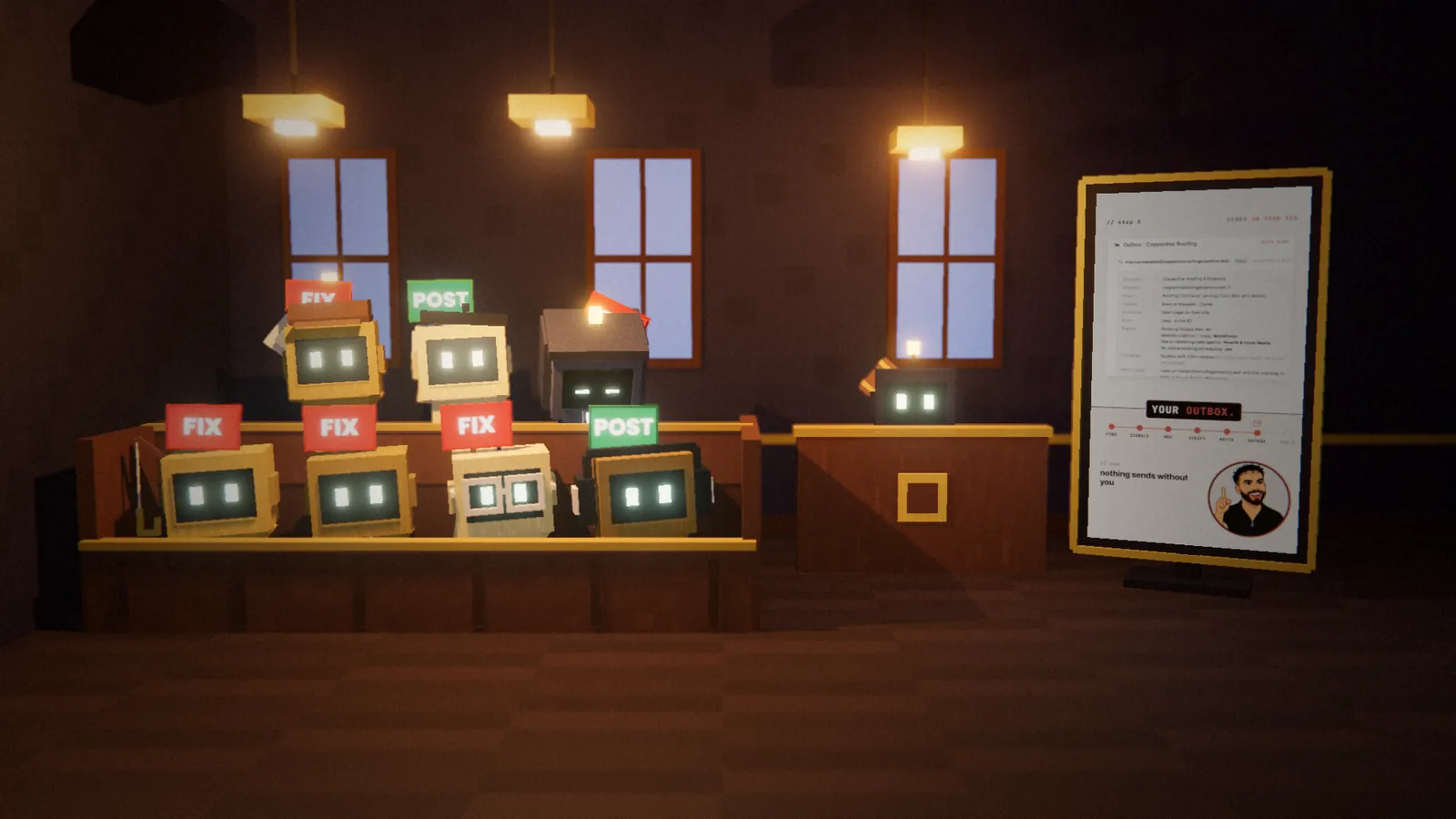
Who is on the jury
Claude cannot play a video. So the skill first turns yours into evidence: frames, contact sheets with the time printed on every tile, the moments the picture changes, loudness numbers and the transcript. Then seven judges each read that evidence alone. None of them sees your notes or each other.
| Judge | The one job |
|---|---|
| Hook | The first 3 seconds. Does the first frame say what this is? |
| Pacing | Where it sits still, where it rushes, where attention drops |
| Captions | Every word on screen: readable, spelled right, matching the voice |
| Sound | Loudness, dead air and peaks, read from meters |
| Proof | Is every claim backed by what is on screen when you say it? |
| Thumbnail | The cover at the size it shows in the grid |
| Scroller | A stranger with a thumb, who says the second they would swipe |
Each judge votes POST, FIX or HOLD, gives a score out of 10, and names at most three problems. Every problem comes with the second it happens and the file the judge saw it in. A script counts the votes. The video passes on 5 or more POST votes with no HOLD from the hook judge or the scroller.
One real run
This is a real run on one of my own Reels, 54 seconds long. The evidence took 11 seconds to build. The last judge answered 96 seconds after the seven started.
/video-jury renders/my-reel.mp4
# Verdict: FIX FIRST

only 1 of 7 voted POST. POST 1, FIX 6, HOLD 0.

hook       FIX   7
pacing     FIX   7
captions   FIX   6
sound      POST  7
proof      FIX   6
thumbnail  FIX   7
scroller   FIX   6
Three of the fixes it handed back, in the judges' own words:
- 2.5 s, captions. "The chunks break mid-phrase, so some chips read as typos. At 2.5 s 'ONE A PERSONAL' lands inside the hook."
- 24.5 s, proof. "While he says 'only sends to addresses that are deliverable' ... at 32.0 s the Outbox shows an email queued to an address marked 'risky'."
- 17 s, scroller. "Around 17 s ... I have the gist and nothing new is on screen, so I swipe."
The first two are plain to see once you open the frames at those seconds. Nobody had caught them before the jury did.
Read the notes, not the count
I ran the full jury three times on that same video with nothing changed. The votes moved every time.
| Run | POST | FIX |
|---|---|---|
| 1 | 2 | 5 |
| 2 | 4 | 3 |
| 3 | 1 | 6 |
The proof judge caught the "risky" address in 4 of its 6 passes. So one run is a strong second opinion, and it will miss things. The problems that come back in a second run are the ones to fix first. Ask for a second run and the skill lists them:
Run the jury again and show me which notes came back both times.
The fine print
It never posts anything. It does not upload, schedule, edit, trim or delete. It reads your video and writes a verdict file.
No judge can hear your video. Sound is judged from loudness numbers and pictures of the audio. Tone of voice, music taste and mispronounced words are out of reach, and the judges say so.
It does not predict views. It finds the problems a careful stranger would find.
It is heavy on usage. Seven judges reading frames used between 800,000 and 900,000 tokens per run on a one-minute video in my tests. A second run doubles it.
The pass mark is my judgment call. Five POST votes out of seven is a line I picked. It is one number in the script; change it if you disagree.
Your files stay on your computer. The evidence and the verdicts are written to a video-jury folder where you run it.
Free and MIT licensed. No signup, no API key, nothing to connect.